I know I’m going to catch some flak for this one. But I think we need to have this conversation.
We have spent decades trying to level the playing field in education. While it certainly isn’t perfect, we have opened more doors to learning than at any point in history. Students can see their grades instantly. They can access assignments from home. They have the internet in their pocket. They have videos explaining almost anything imaginable. They have teachers available through email and learning platforms. They have accommodations, interventions, retakes, tutoring, online resources and technology that previous generations couldn’t have imagined.
And now they have AI. Think about what that means for learning. A student can literally type, “Teach this to me like I’m in third grade.” They can ask, “Explain this another way,” “Give me five practice problems,” “Quiz me until I understand it,” or “Show me where I went wrong.” They can even ask AI to connect a difficult concept to something they already understand or care about.
That changes the conversation around learning. “The teacher didn’t teach me this” can’t be the end of the story anymore. Maybe the teacher’s explanation didn’t connect with you. That happens. Maybe the lesson wasn’t great. That happens too. Maybe you need to hear something five different ways before it finally clicks. I have been in education long enough to know that every student learns differently.
But the next question has to be: What are you going to do about it?
Education ultimately has to include ownership. I worry that sometimes, in our attempt to help students succeed, we remove the very struggle that develops their capacity to succeed. We pad the experience. We soften the landing. We remove obstacles. We sometimes treat failure as something students should be protected from instead of something they need to learn how to navigate.
I don’t think padding education is the answer. I think nurturing failure is. Let students struggle with something. Let them get frustrated. Let them get something wrong. Then teach them what to do next. Ask another question. Find another resource. Talk to someone. Try another approach. Use AI. Watch a video. Practice again. Get feedback. Adjust and go again.
That is where effort, discipline and grit are built.
And I’m not advocating for simply telling students to “work harder.” That misses half the equation. I want students to learn how to work smart AND hard. Working smart means knowing yourself. Understand your aptitudes. Recognize how you learn. Know when you need help. Find better tools. Use technology intelligently. Build relationships with people who know things you don’t know. Working hard means that once you have found a path forward, you still have to walk it.
There is no technology that replaces effort. There is no AI prompt that creates discipline. There is no shortcut around curiosity, and there is no tool that can make someone care enough to keep going. At some point, the individual has to make that choice.
I have worked with students from all kinds of backgrounds over my career. Students with money and students without it. Students from different cultures, different family structures and wildly different life experiences. I have watched students with seemingly every advantage struggle because they simply would not engage. I have also watched students facing significant obstacles absolutely thrive because they were curious, resourceful and willing to put in the work.
That doesn’t mean circumstances don’t matter. Of course they do. Resources matter. Families matter. Schools matter. Teachers matter. Opportunity matters. There are still inequities that schools and communities need to address. But there is another part of the equation that we cannot be afraid to talk about: agency matters too.
We can build the greatest education system imaginable. We can provide technology. We can hire incredible teachers. We can create internships, career pathways, tutoring programs, mentorships and authentic learning experiences. But if we never help a student understand who they are, what their aptitudes are and what makes them click, we are missing something fundamental.
What are they naturally good at? What makes them curious? What problems do they actually enjoy solving? What will they work on for hours without someone standing over them? Where do they see themselves providing value? Those questions matter because when students begin discovering who they are and where their strengths might take them, learning starts to look different.
Learning stops being something being done to them and starts becoming something they take ownership of.
Families have a role in this as well. At some point, students and families have to decide whether they are going to take initiative. Schools can provide opportunities. Teachers can provide guidance. Parents can provide support. Technology can provide access. AI can provide explanations. But none of those things can make someone want to take advantage of what is sitting in front of them.
That choice still belongs to the student.
Maybe one of the most important durable skills we can develop in young people isn’t simply knowing the answer. It is knowing what to do when they don’t know the answer. Get curious. Ask questions. Search for information. Experiment. Fail. Adjust. Ask for help. Try something different and put in the work.
That is what the professional world is going to demand from them. The world our students are entering isn’t going to ask whether someone taught them every single thing they needed to know. Their employer isn’t going to stand next to them every time they encounter something unfamiliar and walk them through it step by step.
The question is going to be much simpler:
Can you figure it out?
We have given this generation access to more information, more technology, more learning tools and now more intelligence on demand than any generation before them.
Our job isn’t to remove every obstacle from their path.
Our job is to help them discover who they are, give them the tools to move forward, allow them to experience failure, build their capacity to respond to it, and then gradually get out of the way.
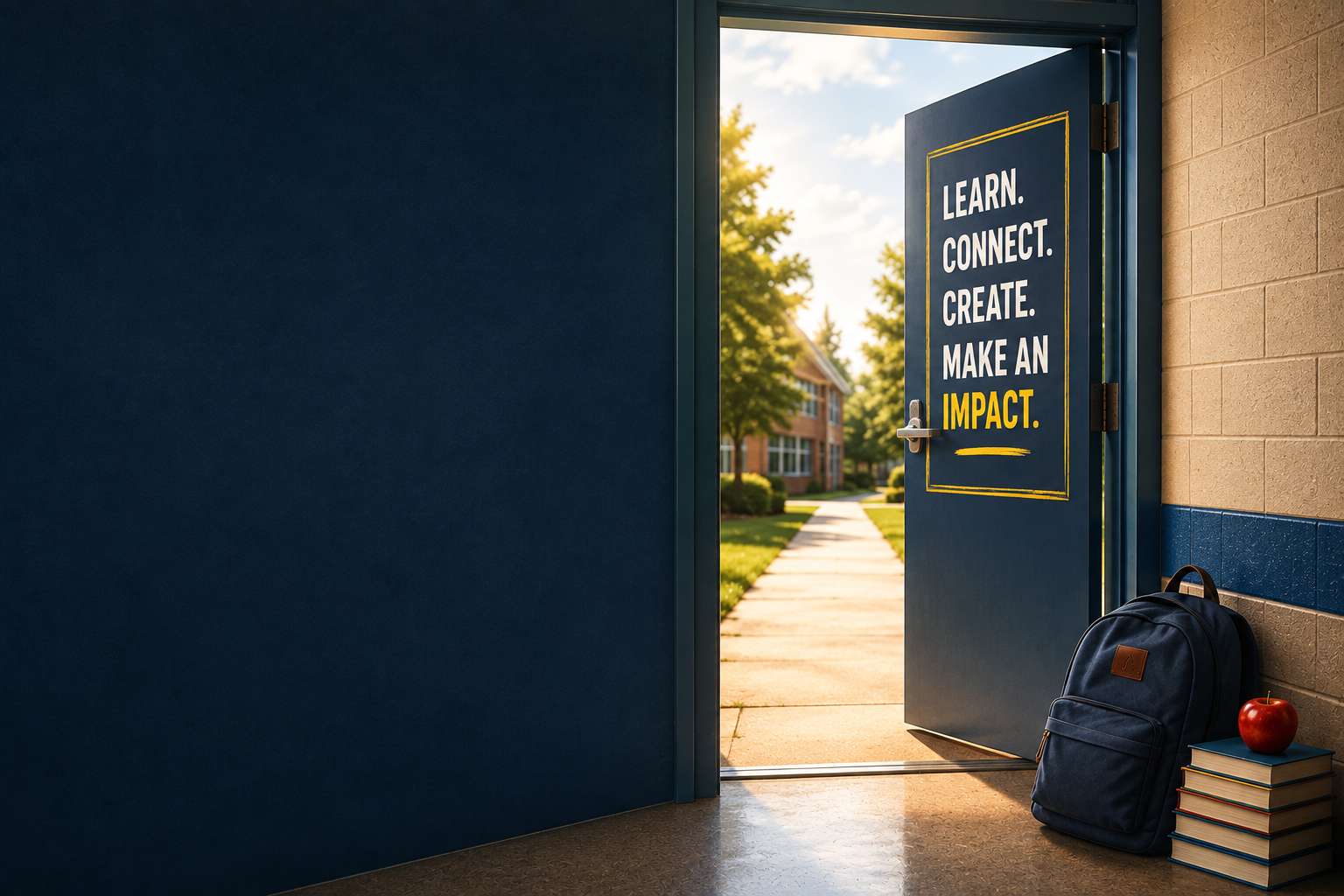
Because eventually, they have to choose to walk through the door.

Peter Hostrawser
Creator of Disrupt Education
My value is to help you show your value. #Blogger | #KeynoteSpeaker | #Teacher | #Designthinker | #disrupteducation